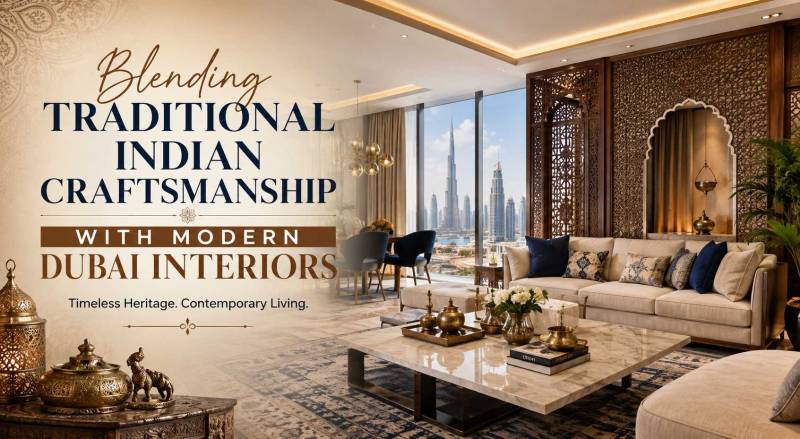
Dubai homes are famous for clean architecture, open layouts and polished finishes. But modern interiors don’t really have to feel cut off from cultural traditions. In fact, one of the most interesting design paths right now is mixing contemporary Dubai living with traditional Indian craftsmanship, in that kind of “quietly together” way.
This idea lets homeowners add warmth, personality and a sense of heritage into spaces that might otherwise lean heavily on glass, stone, metal and minimalist furnishings. The trick is not to copy a full traditional Indian home inside a modern Dubai villa. It’s more about choosing a few meaningful details, and then showing them in a way that fits the contemporary lines of the architecture.
Bringing Indian Craftsmanship Into Modern Homes
Indian craftsmanship has a deep history of working with materials like marble, wood, brass, stone, and textiles. Hand carved elements, detailed patterns, and decorative motifs can bring texture and depth to an interior that otherwise feels too plain.
For homeowners who want a focused, devotional corner, a marble temple for home in dubai can become a refined centerpiece without turning the whole space into something “dated.” A finely carved marble mandir, for example, can sit naturally against neutral walls, modern flooring, and soft, minimal lighting.
The same rule works across the rest of the home. Instead of loading a room with lots of ornaments and ornamental drama, one carefully chosen handcrafted feature can be enough to keep that cultural connection present, without overpowering the contemporary style.
The Beauty of Marble and Natural Stone
Marble is particularly good for this style of interior, because it already has a strong presence in modern Dubai homes. It can show up on flooring, walls, countertops and decorative features, and then traditional Indian carving brings in a more personal touch somehow.
White marble with a faint carving can work especially well with contemporary interiors. Its light look suits Dubai’s habit of spacious, bright rooms, while the workmanship adds small depth that mass produced finishes simply do not manage to deliver.
Natural stone can also go along with wood and metal, without looking forced. For instance, a carved stone feature wall paired with warm timber furniture creates contrast, and the room still won’t feel cramped or visually noisy.
Using Traditional Patterns Without Overdoing Them
Indian design is full of patterns, but when you try to add every classic element into a single room, it can end up feeling busy, a little too much. Modern interiors generally do better with restraint.
A smarter route is to pick one or two patterns and repeat them, quietly. A geometric carving can sit on a partition, and then a similar shape can be reflected again through a rug, a cushion, or even a metal screen.
That way there is visual continuity and the contemporary architecture stays the main focus, not the background noise.
Combining Indian Woodwork With Contemporary Furniture
Wood carving is another effective way to bring in Indian craftsmanship in a more relaxed kind of way. Hand-carved panels, doors, and even furniture pieces can add that kind of warmth to rooms that are mostly polished surfaces and a little too sleek.
The contrast is especially strong when traditional woodwork is set next to modern furniture with simple silhouettes. A carved wooden console for example can sit beneath a contemporary mirror, and neither of them has to shout or compete.
Also, the choice of wood really matters. Richer tones can create a dramatic atmosphere while lighter finishes may fit better with Dubai’s increasingly popular warm-minimalist interiors, somehow both calm and inviting.
Lighting Can Connect the Two Styles
Lighting handles a big part of the job when you want traditional details to feel current. Rather than relying only on decorative chandeliers, homeowners can use recessed lighting, concealed LED strips and spotlights placed with intention, so the handcrafted parts get the focus.
Even a carved marble surface can look totally different when light hits it from the side. The shadows that the carving forms can highlight the depth of the work and make the feature feel architectural, not just decorative.
Warm lighting is usually a good idea for traditional materials, because it brings out the natural tones of wood, stone, and brass.
Creating a Balanced Living Space
The most successful traditional-modern interiors really tend to have a clear sense of balance. Contemporary elements bring structure, functionality and simplicity, while handcrafted pieces add that kind of character you can't easily fake, ya know.
You can build this kind of balance across living rooms, dining areas, bedrooms and even entrance spaces. A modern sofa works well next to Indian textiles. A minimalist dining room might still hold handcrafted wooden furniture, and yes even a basic hallway can feel more alive with a carved panel or some traditional artwork.
The point is not to make every room look distinctly Indian. Rather the cultural influence should feel naturally tied to the homeowner's identity, and also to the architecture of the property.
Respecting Craftsmanship in a Modern Setting
Traditional craftsmanship should be treated as more than decoration. A lot of handcrafted techniques contain knowledge that was passed between generations, not just a “style.” Carving, stone inlay, metalwork and woodwork demand skill and patience and the slight hand-made variations are part of why it looks real.
Modern technology can actually support the craft without replacing it completely. Digital drawings, along with precision tools, can help with planning and measurement. Then artisans still keep control over the detailed finishing part.
That mix can make custom interior elements more practical for contemporary homes, while still protecting the warmth and character of traditional workmanship.
Working With the Right Professionals
Mixing two design worlds takes some careful juggling. Materials need to play nice with each other, dimensions have to match the architecture, and those traditional details should be sort of mapped out before any construction or installation even starts.
So, homeowners are better off talking with pros who really get both modern interior needs and the hands on realities of custom craftsmanship. A company like Taj Mahal LLC might be worth considering when homeowners are looking for unique traditional elements that still fit a contemporary home atmosphere.
Good planning is extra important in Dubai. Because residential projects are not only about style, they also need to follow local building rules, handle climate conditions properly, and think ahead for long-term maintenance too.
Conclusion
Blending Indian traditional craftsmanship with modern Dubai interiors is , honestly, less about picking old versus new. It is more like finding a calm middle ground. Modern architecture tends to bring clean lines, solid functionality, and everyday practicality. Indian craftsmanship adds warmth, fine detail, and a clear cultural identity.
The best outcomes often happen when traditional elements are used selectively. For example a carved marble feature, a handcrafted wooden panel, Indian textile accents, or even a custom metal detail can be plenty to give a contemporary home a distinctive character.
And when those pieces are planned carefully, the traditional side does not look “out of place” in a modern Dubai setting. Instead, it becomes part of the overall architecture, making an interior that feels current, personal, and somehow connected to a deeper design heritage.